
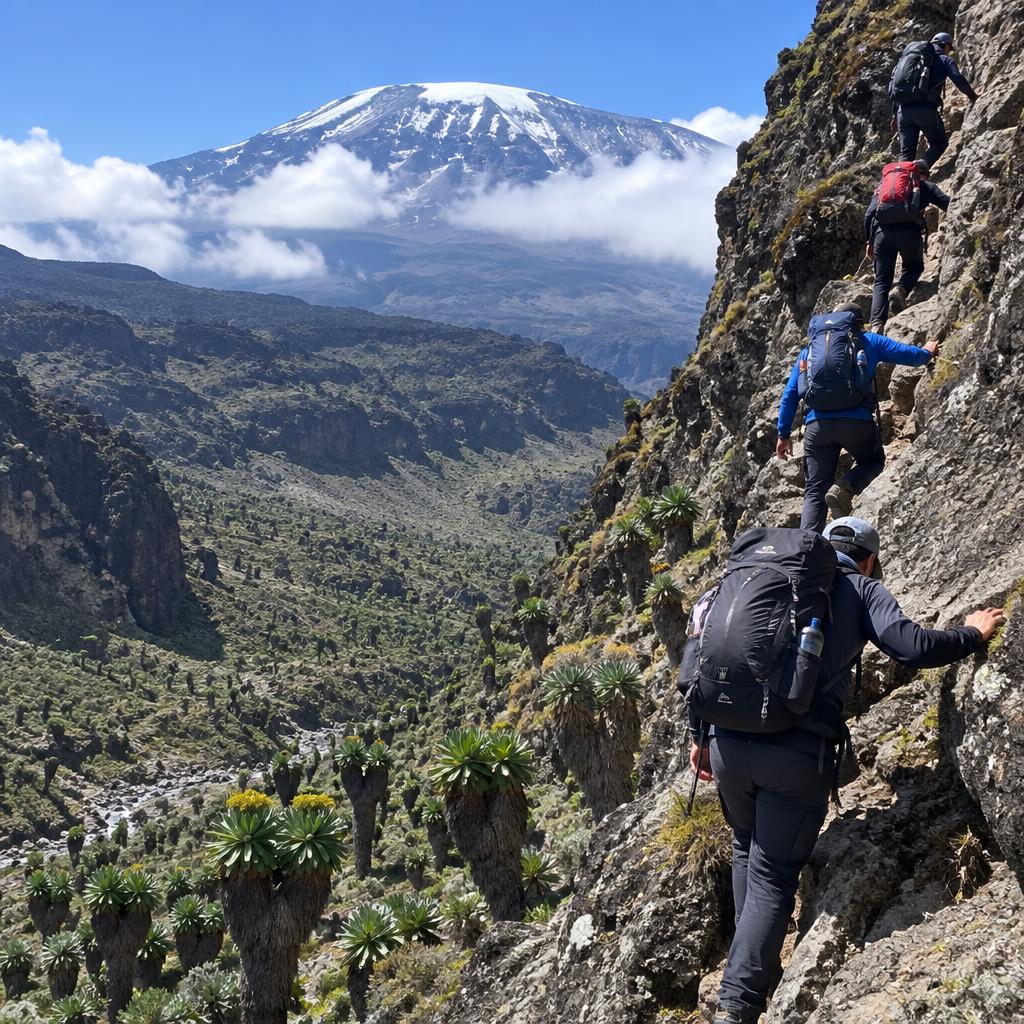
Plan Your Climb
Kilimanjaro can be climbed year-round, but conditions vary dramatically between seasons. The mountain sits just 330 km south of the equator, so it has two dry seasons and two rainy seasons rather than four temperate ones. Choosing the right window makes the difference between crisp sunrise views from Uhuru Peak and slogging through deep mud.
January to mid-March — warm and clear
This is the warmest and often the most pleasant climbing window. Skies are usually clear, daytime temperatures on the lower slopes are comfortable, and the mountain is greener after the short November rains. Mid-March can bring the first showers as the long rains approach, so late January and February are the safest bets.
This period is popular with European and American climbers, so book your permits, crew and hotels a few months ahead.
June to October — the dry, busy season
The long dry season brings the most reliable weather of the year: little rain, low humidity and excellent visibility. June is quieter and cooler; July to September are the busiest months on the mountain, coinciding with the peak safari season in the parks below.
October offers a good compromise — still dry, with thinner crowds and warming temperatures before the short rains begin in November.
April, May and November — the rainy seasons
The long rains (April–May) and short rains (November–mid December) make trails muddy and slippery, cloud often hides the views, and the risk of cold, wet conditions at altitude rises. Most operators run reduced schedules.
That said, experienced trekkers sometimes deliberately choose these months: the mountain is almost empty, hotels and flights are cheaper, and rain on the lower slopes often falls as snow — dramatic scenery for well-equipped, well-led parties.
December to mid-January — a short bonus window
Between the short rains and the January warmth there is often a dry spell around Christmas and New Year. It is a popular festive-season climb, though afternoon showers are still possible on the lower slopes.
Full moon summit climbs
- Summiting on or near a full moon lights the glacier ice and crater rim — no headlamp needed for much of the final ascent.
- For a moonlit summit you climb 5–7 days earlier than the calendar full-moon date, since the summit night falls a week into the trek.
- Full-moon dates fill early — reserve 6–12 months in advance.